
Being a Child under the Political Repression in Turkey
On the Occasion of the World Children`s Day
20 November 2022 | 1:00 PM | YouTube
Set Them Free has organized a comprehensive panel discussion held on November 20th, in recognition of World Children’s Day, aimed at addressing the pressing issues faced by children in Turkey amidst political violence, systemic human rights violations, and social injustices. The event brought together a diverse group of speakers, including young activists, legal experts, social workers, and representatives from civil society organizations, to shed light on the realities children are enduring and to advocate for urgent reforms.
The panel opened with an introduction emphasizing the importance of children’s rights and the role of civil society, particularly highlighting Set Them Free`s best practices, a women-led initiative committed to advocating for children’s and refugee rights. The organization actively works to amplify the voices of marginalized children, including those unjustly detained, displaced, or suffering from neglect. The speakers underscored that despite Turkey’s ratification of the UN Convention on the Rights of the Child in 1989 and its adoption into national law, many of these commitments are not effectively implemented, resulting in widespread violations.
One of the key themes discussed was the systemic nature of violations against children, including arbitrary detention, lack of access to healthcare, educational disparities, and psychological trauma caused by political repression and violence. The speakers pointed out that many children are denied their basic rights due to their family’s legal status, especially those from families with members detained under the Decree Laws (Kanun Hükmünde Karaname – KHK). These children face barriers to social services, such as social security, health care, and education, which are often withheld because of their families’ legal status.
A significant part of the discussion focused on the psychological and emotional scars inflicted on children who have experienced or witnessed violence, displacement, or the detention of loved ones. The speakers shared alarming statistics: over 1 million children in Turkey are affected by detention, with thousands of children having tragically lost their lives due to neglect, violence, or inability to access timely medical care. For example, 19 infants reportedly died before birth due to lack of proper medical attention, and many children have been denied rehabilitation services because of their parents’ political affiliations.
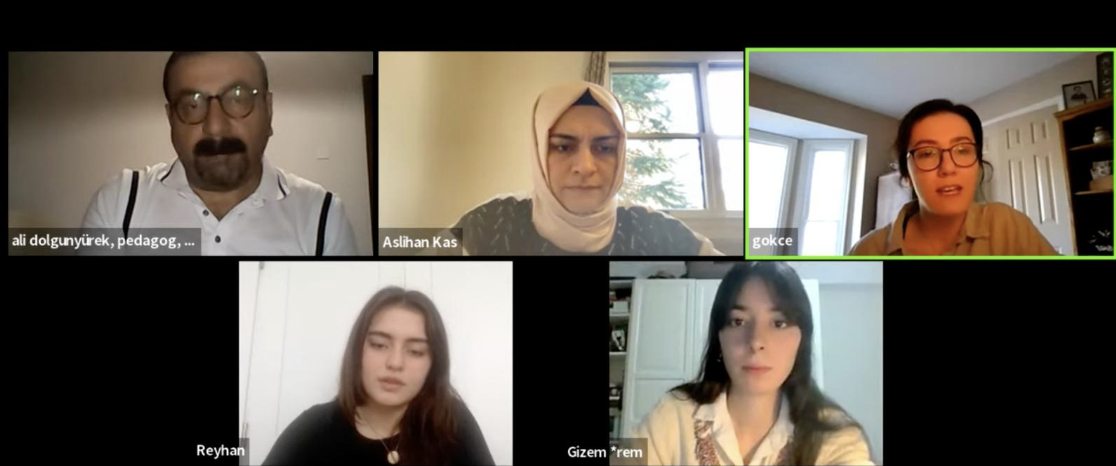
The panel included poignant personal stories, particularly from young individuals like Reyhan Kas, an 11th-grade student currently living in the United States, who shared her emotional journey of growing up amid Turkey’s political turmoil. Reyhan recounted how her experiences shaped her art and writing, highlighting the deep psychological impact of her childhood in a repressive environment. She emphasized the importance of emotional expression and the need for society to listen to children’s voices.
Gizem Irem Topcu, a recently graduated lawyer and a former police officer’s child, shared her own story of growing up from a family affected by political imprisonment. She discussed the challenges faced by children with detained parents, such as difficulties accessing social assistance, education, and healthcare. Topcu also highlighted the discrimination faced by children from families with political backgrounds, including issues like being excluded from scholarships, having their university admissions blocked, and facing stigmatization in social settings.
The discussion also addressed the plight of children with specific health conditions, such as autism and rare syndromes, who are often denied necessary support and rehabilitation services because of their families’ legal status. Examples included children with autism who were expelled from rehabilitation centers due to their parents’ detention, and children with rare syndromes who were denied social aid, illustrating how systemic neglect exacerbates their suffering.
The panel emphasized the importance of international legal avenues for redress, such as individual complaints to the UN Human Rights Committee, which Turkey is a party to. Aslihan Kas from Advocates of Silenced Turkey explained that although Turkey ratified the UN Convention on the Rights of the Child, violations continue, and many children and families have taken their cases to international bodies, which have consistently ruled in favor of the victims, citing violations of non-discrimination, access to health, and detention rights. She called for increased awareness and use of these legal mechanisms to press for accountability and systemic change.
Pedagogic expert Ali Dolgunyurek highlighted numerous cases to illustrate the magnitude of rights violations, including children who have been physically harmed, denied education, or refused medical treatment, as well as cases of children who have tragically lost their lives or suffered lifelong trauma. For instance, children born in detention or under circumstances where their health was compromised due to systemic neglect were highlighted, underscoring the urgent need for systemic reforms.
The panel also discussed the societal and psychological consequences of these violations. Children who grow up in environments marked by violence, displacement, and familial detention are at high risk of developing depression, anxiety, and post-traumatic stress disorder. The speakers stressed that mental health support and trauma-informed care should be integral parts of the child rights response. Throughout the event, the experts, advocates and survivors called for a holistic approach that combines legal action, social support, mental health services, and societal awareness. They emphasized that protecting children’s rights is a collective responsibility—not only of governments but also of civil society, media, and individuals. The importance of fostering resilience among children through emotional support, open dialogue, and community engagement was repeatedly stressed.
The event concluded with messages of hope and resilience. The speakers expressed their belief that despite the numerous challenges, children are resilient and capable of overcoming adversity when supported adequately. They urged society to listen to children’s voices, to provide safe spaces for expression, and to continue activism for systemic change.
In closing, the organizers and participants reaffirmed their commitment to continue advocacy efforts, including future campaigns, legal actions, and awareness activities, to ensure that children’s rights are upheld and that no child is left behind. They emphasized that protecting the rights and well-being of children, especially those affected by political violence and systemic injustice, is vital for building a just and compassionate society. This vital discussion therefore underscored that the voices of children must be at the center of all efforts toward justice and peace.
PANELISTS:
Beyzanur Gokce Ak, Board Member, Set Them Free
Ali Dolgunyurek, Pedagog
Gizem Irem Topcu, Lawyer
Reyhan Kas, High School Student, Activist
Aslıhan Kas, Board Member, Advocates of Silenced Turkey
 Previous Post
 Next Post